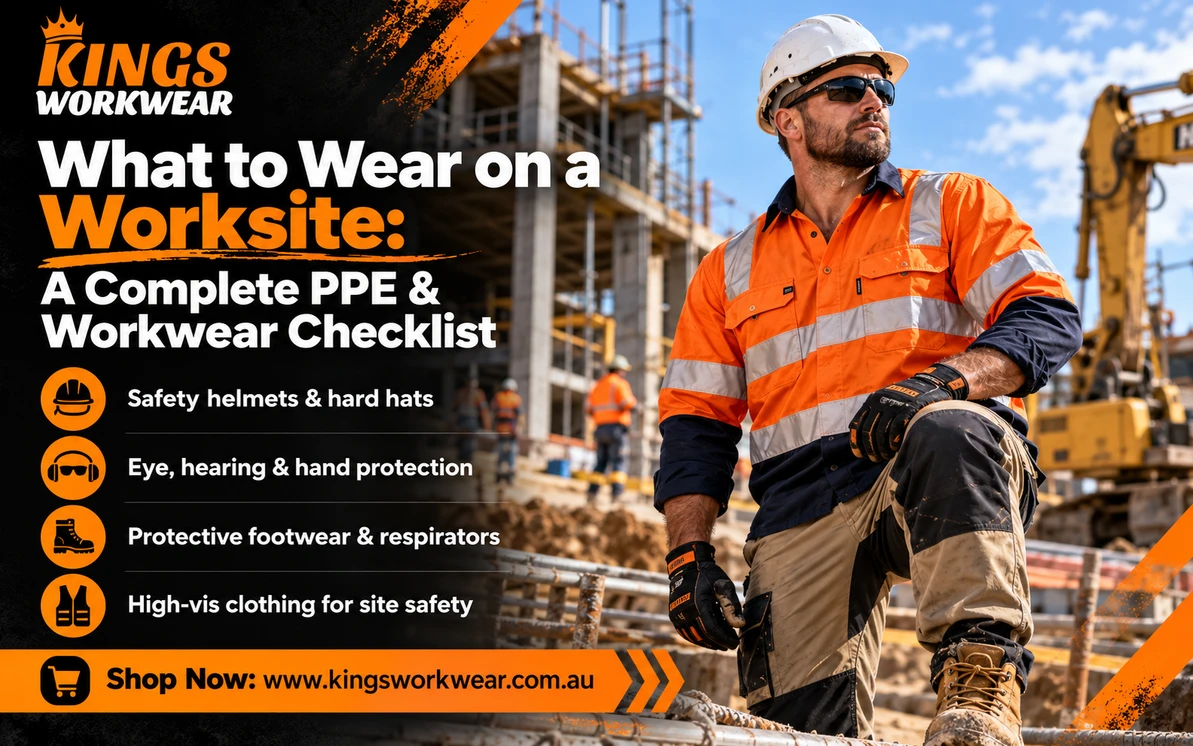
What to Wear on a Worksite: A Complete PPE & Workwear Checklist
A construction worker handling power tools faces different risks from a warehouse employee moving stock or a maintenance technician working outdoors. Yet all three need suitable protective clothing and equipment to carry out their jobs safely.
Choosing the right gear starts with understanding workplace hazards. A practical worksite ppe checklist helps workers identify essential protective equipment, check its condition and prepare for the tasks ahead. From safety boots and helmets to high-visibility clothing and respiratory protection, every item should serve a clear purpose.
This guide explains what to wear on Australian worksites, how protective equipment requirements vary and what to inspect before starting work.
What PPE Should You Wear on a Worksite?
Personal Protective Equipment (PPE) includes clothing and equipment designed to reduce exposure to workplace hazards. Depending on the job, this may involve protective footwear, safety glasses, gloves, helmets or specialist respiratory equipment.
Not every worksite requires identical protection. Employers and workers should consider:
- The hazards associated with specific tasks
- Potential exposure to machinery, chemicals or airborne particles
- Vehicle movements and visibility conditions
- Weather and environmental exposure
- Applicable workplace safety procedures
- The fit and suitability of individual equipment
Ordinary uniforms are not automatically PPE. Clothing must provide protection against an identified hazard to be considered protective equipment.
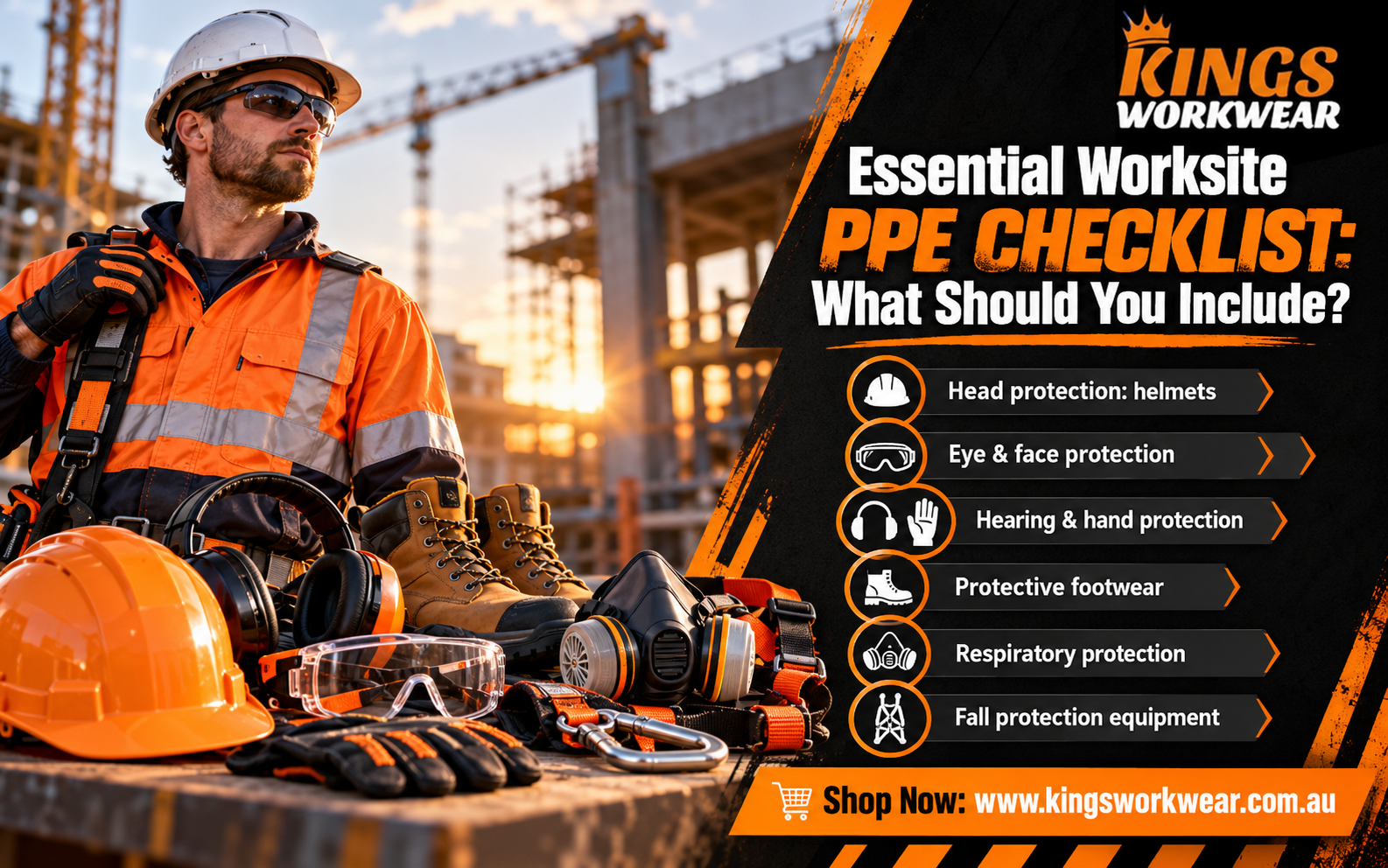
Essential Worksite PPE Checklist: What Should You Include?
A useful checklist considers different parts of the body and the risks associated with each activity.
1. Head Protection: Safety Helmets and Hard Hats
Construction and industrial environments may expose workers to falling objects, overhead obstacles and accidental head impacts.
Safety helmets should be selected according to the hazards identified during the risk assessment.
Before wearing a helmet, inspect its shell, suspension system and adjustment mechanism. Cracked, damaged or otherwise unsuitable helmets should be removed from service.
2. Eye and Face Protection
Cutting, drilling, grinding and chemical handling can expose workers to flying particles, splashes and other hazards.
Common protective options include:
- Safety glasses for suitable impact hazards
- Sealed goggles for certain dust or splash exposures
- Face shields for additional facial protection
- Specialist welding protection for relevant tasks
Choose equipment with the appropriate protection rating. A face shield may need to be worn with suitable safety glasses or goggles, depending on the hazard.
3. Hearing Protection
Power tools, compressors and industrial machinery can generate harmful noise levels.
Earplugs and earmuffs help reduce noise exposure when selected and worn correctly.
The required level of protection depends on workplace noise assessments. Workers should also check that hearing protection fits comfortably alongside helmets and other equipment.
4. Hand Protection
Hands are frequently exposed to cuts, abrasions, chemicals, heat and rough materials.
Different tasks require different glove materials and designs.
For example:
- Cut-resistant gloves for suitable sharp-material handling
- Chemical-resistant gloves matched to the substance involved
- Heat-resistant gloves for appropriate thermal hazards
- Grip gloves for certain general handling tasks
Gloves should never be selected purely on thickness. They must suit the task, particularly where rotating machinery could create an entanglement hazard.
5. Protective Footwear
Worksites may contain sharp debris, heavy materials, slippery surfaces and uneven ground.
Suitable safety footwear can include protective toe caps, slip-resistant outsoles, penetration-resistant components and other features appropriate to the workplace.
Check the fit, sole condition, tread and fastening system before use.
6. Respiratory Protection
Dust, fumes, mists and airborne contaminants may require respiratory protection when other controls cannot adequately manage exposure.
The correct respirator depends on the contaminant, concentration and working conditions.
Where required, workers must receive appropriate training and fit testing. Disposable dust masks are not suitable for every respiratory hazard.
7. Fall Protection Equipment
Working at heights requires particular attention to fall prevention.
Guardrails, safe work platforms and other higher-level controls should be considered before relying on personal fall protection.
Where a fall arrest system is necessary, suitable harnesses, connectors, anchors and rescue arrangements must be provided and used by trained workers.
How to Choose Site Safety Clothing for Different Working Conditions
Protective workwear should support everyday movement while addressing the environmental and physical demands of the job.
High-Visibility Workwear
Workers operating near vehicles, mobile equipment or moving machinery may need high-visibility clothing.
Suitable options can include reflective vests, high-visibility shirts, jackets and trousers.
The required garment classification depends on the workplace environment and applicable standards.
Clothing for Hot and Outdoor Conditions
Australian outdoor workers may experience prolonged heat and sun exposure.
Practical clothing considerations include breathable materials, suitable long sleeves, sun protection and designs that support movement.
Heat management also requires access to drinking water, appropriate breaks and other workplace controls.
Clothing for Cold and Wet Conditions
Rain, wind and cold temperatures can affect comfort, concentration and movement.
Weather-resistant jackets, suitable layers and protective footwear can help workers manage changing conditions.
Clothing should also fit correctly around machinery and allow workers to bend, climb and carry materials without unnecessary restriction.
Understanding PPE Requirements on Australian Worksites
Australian work health and safety laws require workplace risks to be managed using suitable control measures.
Under the hierarchy of controls, eliminating hazards and implementing more effective protective measures generally take priority over relying on PPE alone.
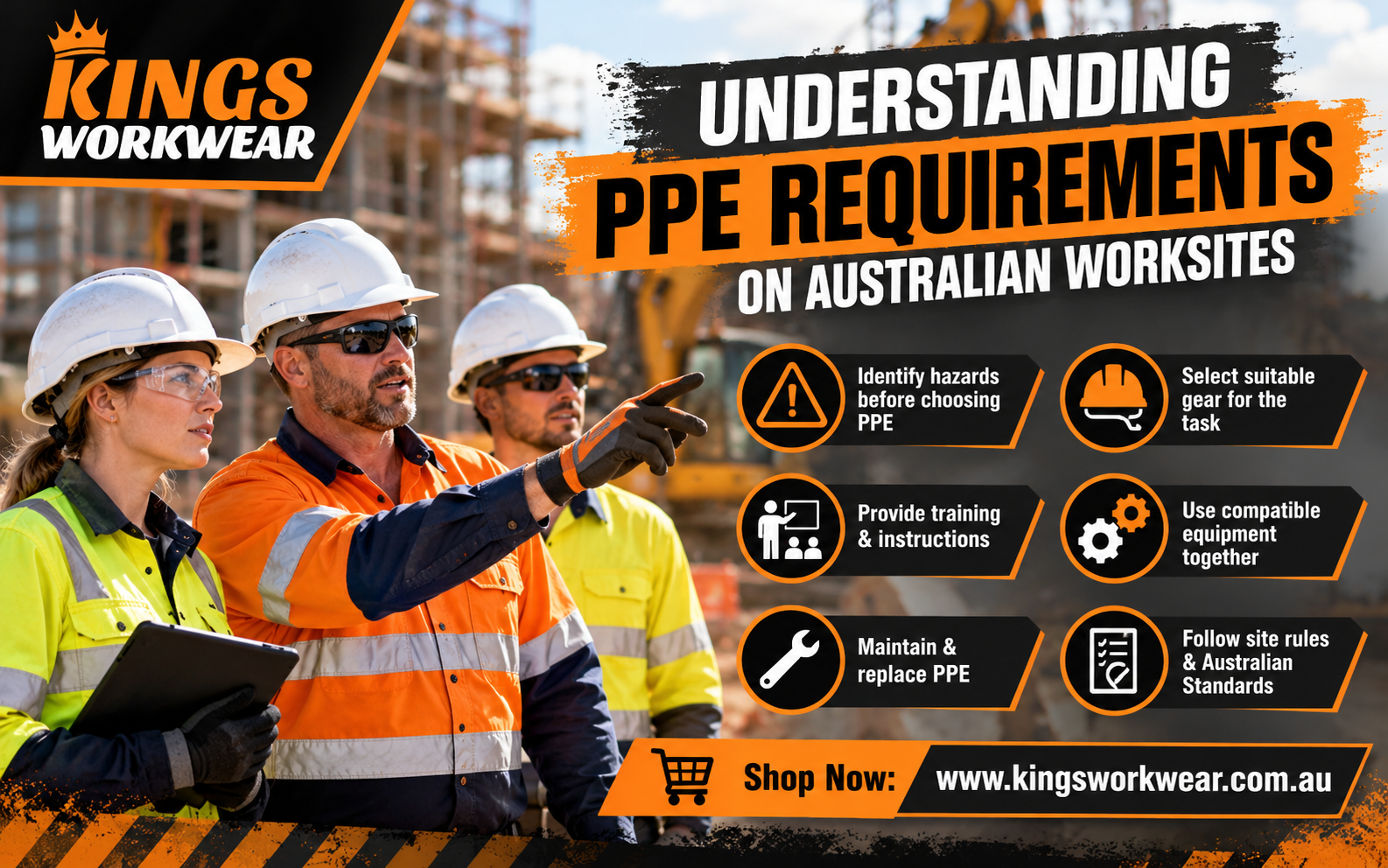
Important considerations include:
- Identifying hazards before selecting equipment
- Choosing PPE suitable for the work and the wearer
- Providing necessary instruction and training
- Ensuring compatible equipment can be worn together
- Maintaining and replacing protective equipment
- Following site-specific procedures and applicable Australian Standards
Employers and other persons conducting a business or undertaking have duties relating to workplace safety and PPE provision.
Workers must also follow reasonable safety instructions and use provided equipment correctly.
How to Inspect PPE Before Starting Work
Even suitable protective equipment may become ineffective when damaged, poorly fitted or incorrectly maintained.
A pre-start inspection should form part of everyday workplace preparation.
Quick PPE Inspection Checklist
- Check helmets for cracks, impact damage or worn suspension components.
- Inspect safety glasses and goggles for scratches or damaged lenses.
- Examine gloves for tears, holes and material deterioration.
- Check safety boots for damaged soles, stitching and protective components.
- Inspect high-visibility clothing for significant fading or reflective material damage.
- Examine hearing protection for worn seals or damaged components.
- Check respirators, filters and seals according to manufacturer instructions.
- Inspect height safety equipment using the required inspection procedures.
- Confirm all equipment fits and works together properly.
Damaged or unsuitable equipment should be reported and replaced as required before the affected task begins.
Common PPE Mistakes Workers Should Avoid
Having safety equipment available does not automatically mean workers are adequately protected.
Common mistakes include wearing loose-fitting protective gear, selecting gloves without considering the hazard, using scratched safety glasses and continuing to wear damaged footwear.
Another mistake is treating protective equipment as a replacement for safe working procedures.
Regular instruction, supervision and inspections help workers understand both the purpose and limitations of their equipment.
Why Choose Kings Workwear for PPE and Site Safety Equipment?
Kings Workwear supplies protective equipment and practical workwear for Australian workers and businesses. Its range includes head and face protection, safety gloves, hearing protection, respiratory equipment, height safety products and workplace safety accessories.
Instead of selecting equipment based only on price or appearance, customers can compare products according to their work activities and protection needs.
Businesses organising equipment for multiple employees can also consider product suitability, size availability, durability and comfort when planning their purchases.
Whether preparing for construction, maintenance, warehouse duties or other workplace activities, choosing reliable equipment starts with identifying the hazards involved.
Explore site safety clothing and protective equipment options that suit your workplace needs.
Frequently Asked Questions About Worksite PPE
What PPE Is Required on a Construction Site in Australia?
Requirements depend on site hazards and specific tasks. Protective footwear, helmets, eye protection and high-visibility clothing are commonly used, but additional equipment may be necessary following a risk assessment.
Are Safety Boots Mandatory on Every Worksite?
Not universally. Safety footwear requirements depend on the risks present and workplace rules. Where foot hazards exist, employers must ensure suitable protective measures are implemented.
What Is the Difference Between PPE and Workwear?
Workwear refers broadly to clothing worn while working. PPE specifically protects against identified health and safety hazards. Some workwear, including suitable high-visibility or protective clothing, also qualifies as PPE.
How Often Should Workplace PPE Be Inspected?
Workers should check equipment before use and follow the manufacturer's instructions. Certain equipment, particularly fall protection systems, also requires formal inspections at specified intervals.
Who Is Responsible for Providing PPE in Australia?
Employers and other duty holders generally have responsibilities to provide suitable PPE where required, without charging workers, and ensure its appropriate use, maintenance and replacement.
Final Thoughts
Worksite safety begins with recognising hazards and selecting appropriate controls. Suitable protective clothing and equipment provide an additional layer of protection when risks cannot be adequately controlled through other measures alone.
A consistent checklist, regular equipment inspections and proper training help workers prepare for changing conditions and different tasks.
Understanding workplace ppe requirements also helps businesses make informed purchasing decisions and establish safer working practices.
Before your next shift, review the hazards, inspect your equipment and ensure your workwear is suitable for the job ahead.
Recent Posts
-
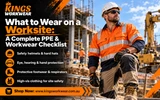
What to Wear on a Worksite: A Complete PPE & Workwear Checklist
A construction worker handling power tools faces different risks from a warehouse employee moving st …15th Oct 2026 -
What Should Men Wear to Work in Perth’s Changing Weather?
Perth weather can make choosing the right workwear more complicated than simply getting dressed for …8th Oct 2026 -
Where Should Your Business Logo Sit on a Work Shirt?
A business logo may only take up a small area on a work shirt, but its position can have a major eff …23rd Sep 2026