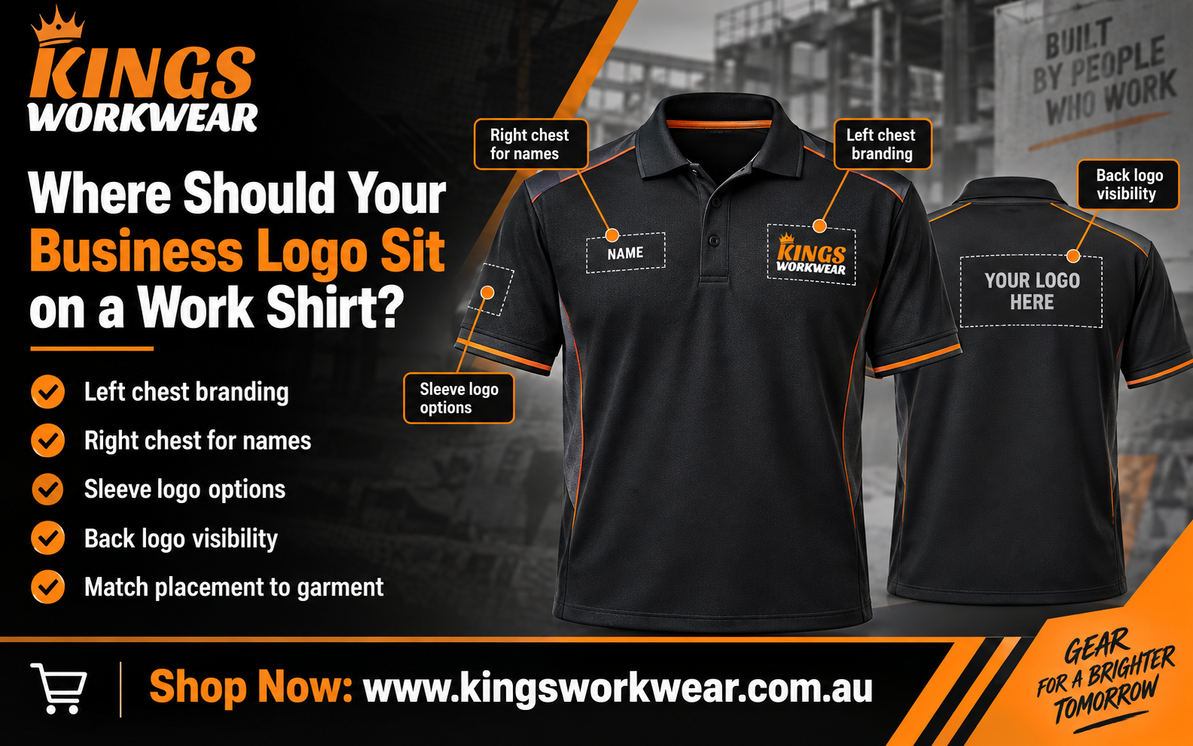
Where Should Your Business Logo Sit on a Work Shirt?
A business logo may only take up a small area on a work shirt, but its position can have a major effect on how professional, balanced and recognisable the uniform looks. The right placement should make the brand easy to identify without interfering with pockets, seams, reflective tape or other practical garment features.
For businesses arranging uniforms through an embroidery shop Perth provider, logo placement is worth deciding before production starts. Left chest is often the most familiar option, but it is not automatically the best choice for every shirt, logo or workplace. Right-chest branding, sleeve embroidery and larger back designs can also work effectively when they suit the garment and the purpose of the uniform.
The best position depends on how the shirt will be worn, who needs to see the branding and what type of work the employee performs. This guide explains the main logo placement options and what businesses should consider before approving branded workwear.
Why Does Logo Placement Matter on Workwear?
Logo placement is not simply a design decision. Work clothing needs to remain functional, comfortable and suitable for the job while still representing the business.
A well-positioned logo can help:
- Make employees easier to identify
- Create a consistent business appearance
- Keep branding visible during customer interactions
- Maintain a clean and professional uniform design
- Avoid interference with pockets and garment features
- Improve logo readability
- Make different uniforms feel part of the same brand
The right location may also vary depending on whether employees spend most of their time meeting customers, working outdoors, driving, operating equipment or moving around a large worksite.
Instead of asking only where the logo can fit, think about where people are most likely to see it.
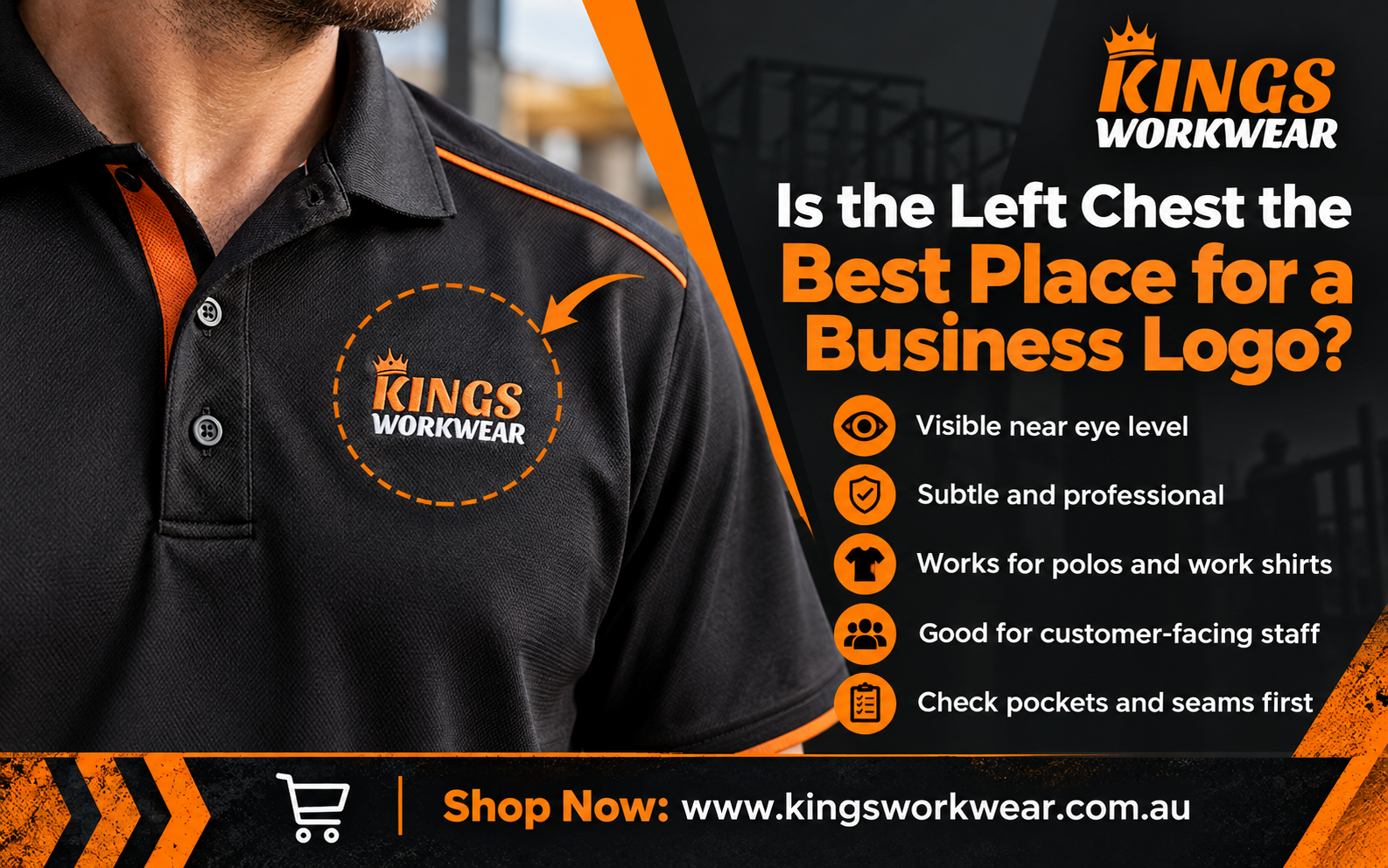
Is the Left Chest the Best Place for a Business Logo?
For many work shirts, polos and corporate uniforms, the left chest is one of the most practical branding positions.
It provides a visible area near eye level while keeping the logo relatively subtle. During face-to-face interactions, the company name is usually easy to notice without dominating the entire garment.
Left-Chest Placement Works Well For
- Trade uniforms
- Corporate polos
- Button-up work shirts
- Hospitality uniforms
- Customer service teams
- Warehouse staff
- Maintenance teams
- Sales representatives
A small company logo, symbol or business name usually works well in this area.
However, check the actual garment before confirming the position. Some shirts contain chest pockets, seams or ventilation panels that reduce the available embroidery space.
What About the Right Chest?
The right chest is another useful position, particularly when businesses want to include more than one piece of information.
Rather than placing the same company logo on both sides, businesses often use the right chest for:
- Employee names
- Job titles
- Department names
- Qualifications
- Business divisions
- Secondary branding
For example, a company logo may sit on the left while the employee's name is embroidered on the right.
Keep Both Sides Balanced
Both sides do not need to contain graphics of exactly the same size.
A large company logo on one side and a similarly large employee name on the other can make the shirt look crowded. In many cases, the company branding should remain the primary visual element while the name or job title stays smaller.
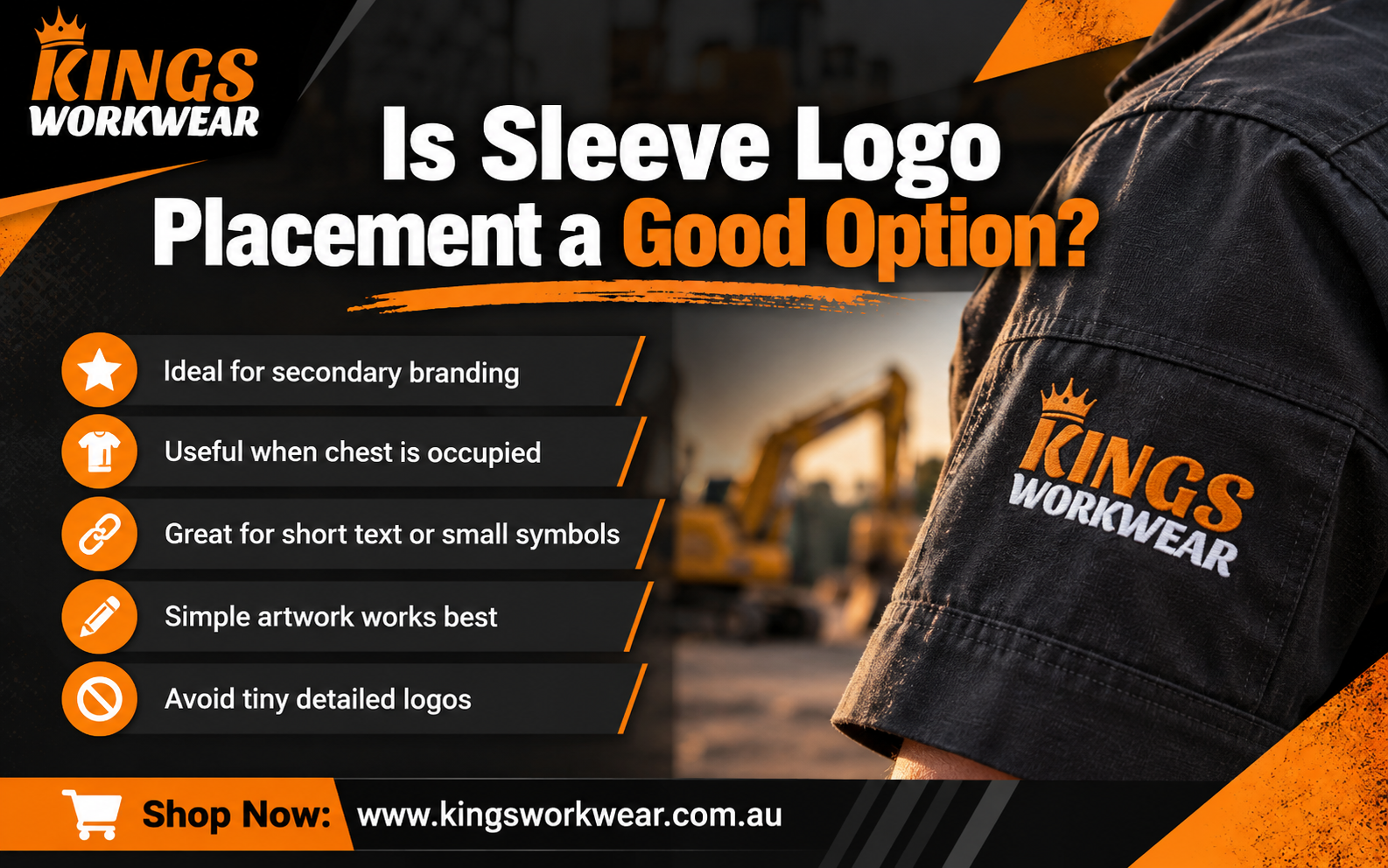
Is Sleeve Logo Placement a Good Option?
Sleeves can work well for secondary branding.
This position is particularly useful when the chest is already occupied or when the business needs to display another logo, business division or supporting mark.
Sleeve branding can suit:
- Small company symbols
- Secondary logos
- Sponsor branding
- Service divisions
- Industry marks
- Short text
Because the available space is limited, simpler artwork generally works better than highly detailed designs.
Keep Sleeve Artwork Simple
Tiny lettering and complicated symbols can become difficult to recognise when reduced to sleeve size.
If a logo contains a long tagline, several small elements or fine details, consider whether the full design is really needed on the sleeve.
A simplified version may produce a cleaner result.
Should a Business Put a Large Logo on the Back?
Back branding serves a different purpose from chest embroidery.
A chest logo is particularly effective during direct conversations. A back design can remain visible when an employee is walking away, working, carrying equipment or facing another direction.
Larger back logos may suit employees who regularly work:
- On construction sites
- At public events
- At customer properties
- In warehouses
- On delivery routes
- At installation sites
- In outdoor environments
A back design may contain a larger company logo, business name or short supporting message.
Bigger Does Not Always Mean Better
It can be tempting to use as much available space as possible, especially when branding a large area such as the back of a shirt.
However, oversized logos can make workwear appear more like promotional merchandise than professional staff clothing.
The ideal size depends on how far away the branding needs to be recognised.
A technician entering a customer's home may benefit from subtle, professional branding. A team working across a large construction area may need stronger visibility.
The purpose of the uniform should guide the decision.
How Should Logo Placement Work on Hi-Vis Shirts?
Logo placement needs extra consideration on high-visibility workwear.
Hi-vis shirts may contain:
- Reflective tape
- Contrasting colour panels
- Chest pockets
- Ventilation areas
- Buttons
- Zips
- Seams
- Safety features
Branding should fit around these features instead of interfering with them.
Check the Garment Before Approving the Artwork
Before finalising a logo location, inspect:
- Reflective tape position
- Chest-pocket placement
- Available embroidery area
- Garment seams
- Colour changes
- Ventilation panels
- Shirt size
- Branding visibility
A position that works perfectly on a standard polo may not work on a hi-vis work shirt.
This is why it is usually better to select the garment before confirming the final logo placement.
Should Every Uniform Use the Same Logo Position?
Consistency is important, but forcing exactly the same position onto every garment is not always practical.
A business may use several types of workwear throughout the year, including:
- Work shirts
- Polos
- Hi-vis shirts
- Hoodies
- Jackets
- Vests
- Corporate shirts
Each garment has different seams, pockets and available branding areas.
Rather than insisting on identical measurements across every item, aim for visual consistency.
For example, a business might establish that its primary logo should appear on the left chest whenever the garment design allows it.
The exact position can then be adjusted slightly according to the clothing style.
How Large Should a Work Shirt Logo Be?
There is no single logo size that works for every uniform.
The shape and complexity of the artwork are just as important as the overall dimensions.
Before choosing a size, consider the following.
Readability
Can the business name still be recognised easily?
Fine Details
Does the design contain small text, thin lines or detailed graphics that may lose clarity?
Garment Proportion
Does the logo look balanced against the size of the shirt?
Viewing Distance
Will people see the logo during a conversation or from several metres away?
Brand Hierarchy
Is the company logo more prominent than employee names, departments or secondary marks?
The goal should be clarity, not simply maximum size.
Does the Shape of the Logo Affect Placement?
Yes. Different logo shapes naturally suit different areas of a garment.
Horizontal Logos
Wide logos often work well across the chest or in a larger back area.
Square or Circular Logos
Compact logos can suit the chest, sleeve and other smaller branding spaces.
Tall Logos
Vertically shaped artwork can require more careful placement because most chest areas are wider than they are tall.
Logo With a Tagline
Long taglines can become difficult to read once the logo is reduced to chest size.
In some cases, businesses may get a cleaner result by using the main company logo without the tagline on smaller garment areas.
Logo Placement by Employee Role
Different employees may benefit from different branding arrangements.
Trades and Field Teams
A visible chest logo works well for identification, while back branding can make the company easier to recognise when staff are working at customer sites.
Customer-Facing Staff
A clean chest logo generally creates a professional appearance without making the uniform overly promotional.
Supervisors and Managers
A name or job title can be added where clearly identifying responsibility is useful.
Delivery Teams
Back branding can remain visible while employees move around loading areas, customer properties and delivery sites.
Office Staff
Smaller, subtle logos often work well on polos, shirts and jackets used in professional environments.
What Affects the Cost of Workwear Embroidery?
Logo placement can also affect the overall branding requirement.
Kings Workwear has previously covered this topic in its blog, “How Much Does Custom Workwear Embroidery Cost in Perth?”
As discussed in that guide, embroidery pricing can vary depending on factors such as:
- Logo size
- Stitch count
- Artwork complexity
- Number of garments
- Number of branding positions
- Individual employee names
- Garment type
This means businesses should avoid adding extra embroidery positions simply because space is available.
If a single chest logo provides enough visibility, adding sleeve and back embroidery may not always be necessary.
Businesses arranging embroidery in Perth should therefore consider placement, size, quantity and artwork complexity together rather than making each decision separately.
Embroidery or Printing: Does Placement Change?
It can.
Embroidery creates a stitched finish and works particularly well for professional branding on polos, shirts, jackets and many types of workwear.
Printed branding, including digital transfer methods, can sometimes accommodate larger artwork or more detailed designs.
The suitable choice depends on:
- Artwork detail
- Garment material
- Logo size
- Position
- Number of colours
- Desired finish
- Uniform use
For example, a small chest logo may be well suited to embroidery, while a larger, highly detailed back design may require a different branding approach.
The artwork and garment should be assessed together.
Common Logo Placement Mistakes to Avoid
Small placement mistakes can have a noticeable effect once an entire staff order has been produced.
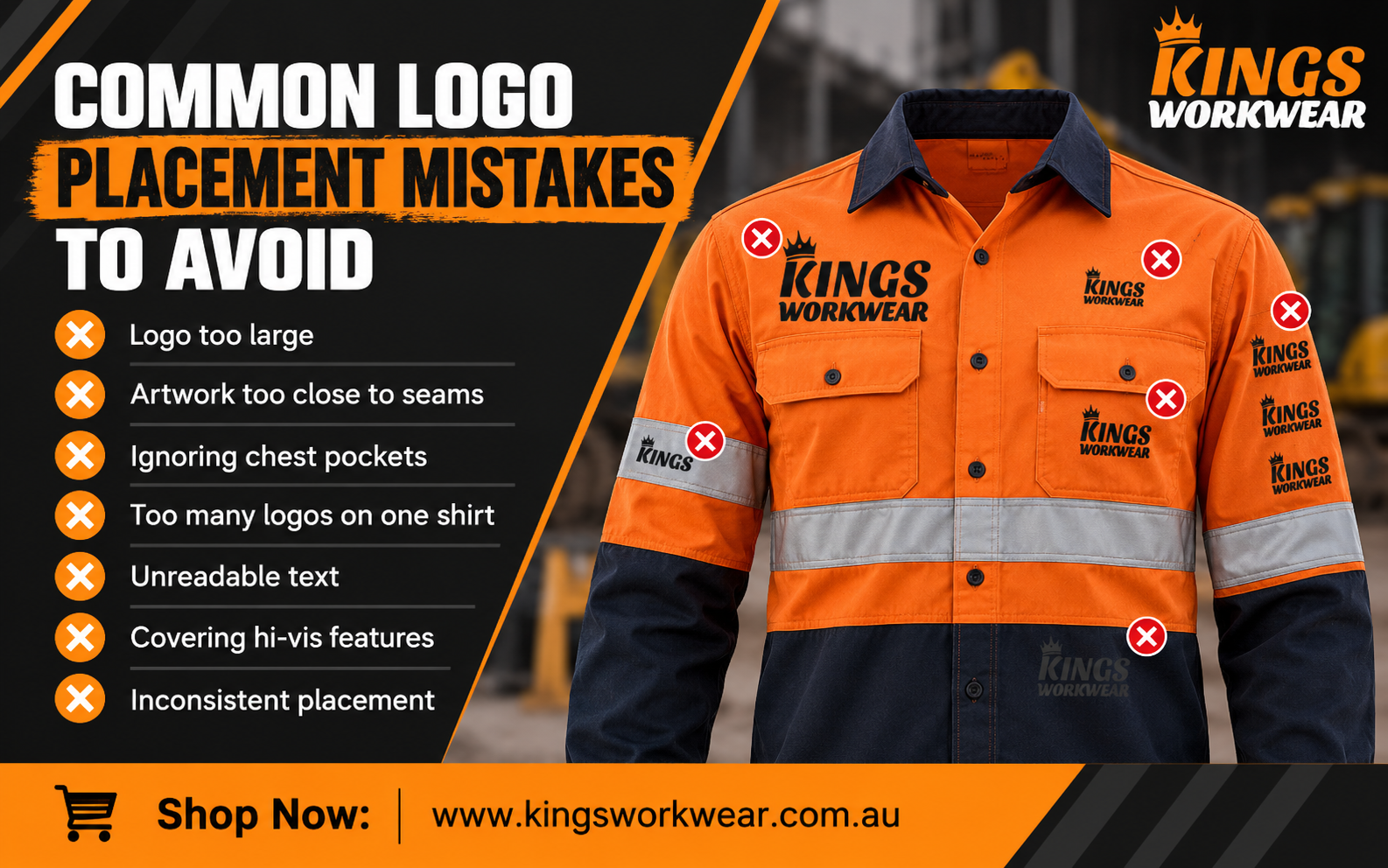
Common problems include:
- Making the logo unnecessarily large
- Placing detailed artwork in a small sleeve area
- Ignoring chest pockets
- Putting branding too close to seams
- Adding too many logos to one shirt
- Using text that becomes unreadable
- Covering important hi-vis features
- Choosing placement before selecting the garment
- Using inconsistent positions across the team
- Forgetting to consider different shirt sizes
Another common mistake is assessing the design only on a computer screen.
A logo that appears balanced in an artwork file may look different once it is applied to a real garment.
Create a Simple Uniform Branding Standard
Businesses that order uniforms regularly can save time by creating a simple internal branding guide.
It does not need to be complicated.
Record details such as:
- Approved company logo
- Approved thread colours
- Standard chest location
- Standard logo size
- Employee-name position
- Back-logo requirements
- Approved uniform colours
- Approved garments
- Sleeve-branding rules
A clear system makes repeat ordering easier and helps maintain a consistent appearance when new employees join the company.
FAQs About Business Logo Placement on Work Shirts
Where is the most common place for a logo on a work shirt?
The left chest is one of the most common locations because it is visible during face-to-face interactions and usually provides enough space for a professional company logo.
However, the best position still depends on the shirt design, pockets, seams and intended use.
Should a business logo go on the left or right chest?
Either position can work.
Many businesses use the left chest for their primary logo and the right chest for an employee name, job title or department.
The important thing is to create a balanced layout that does not make the garment look crowded.
Can you embroider over a shirt pocket?
It may be possible on certain garments, but the pocket design and construction need to be considered first.
Embroidery can sometimes affect the usable pocket area, so businesses should check the shirt before approving the location.
How big should a chest logo be?
There is no universal size.
The ideal dimensions depend on the logo shape, amount of text, garment size and viewing distance.
A logo should be large enough to recognise without overwhelming the shirt.
Can a logo be embroidered on a sleeve?
Yes, sleeves can provide a useful area for secondary branding, small business marks or supporting logos.
Simpler artwork usually works better because sleeve space is more limited than the chest or back.
Should employee names be embroidered on work shirts?
Employee names can be useful for customer-facing teams, supervisors and businesses where personal identification is important.
They are commonly positioned on the opposite chest from the company logo.
Is back branding necessary on every work shirt?
No.
Back branding is most useful when employees need to be identified from a greater distance or when they regularly work with their backs facing customers or the public.
A chest logo alone may be sufficient for many businesses.
Can the same logo placement be used on polos and hi-vis shirts?
Not always.
Different garments have different pockets, seams, reflective tape and panels.
Businesses can maintain a consistent branding style while slightly adjusting the exact location for each garment.
Should the logo include the company tagline?
It depends on the size of the branding area.
Long taglines and very small text can become difficult to reproduce clearly on chest or sleeve embroidery.
Using a simplified logo may create a cleaner result.
How should a business plan logo placement before placing a bulk order?
Start by selecting the garments, then review the available branding areas.
Confirm logo size, position, colours, employee names and any secondary branding before production begins.
It is also helpful to keep an approved uniform branding guide for future orders.
Why Choose Kings Workwear for Branded Workwear?
Kings Workwear supplies work clothing and custom branding options for businesses that want a consistent and professional uniform appearance.
Businesses can consider the garment, logo artwork and branding method together rather than treating each part of the uniform separately.
This is particularly useful when teams require a mix of polos, work shirts, hi-vis clothing, jackets and other workplace garments.
Kings Workwear also provides embroidery and digital branding options, helping businesses select a suitable approach based on the garment, artwork and required finish.
For teams planning ongoing uniform orders, having clothing and custom logo services available through one supplier can also make repeat ordering and branding consistency easier to manage.
What Should You Prepare Before Ordering Branded Workwear?
Before contacting a provider offering embroidery services Perth businesses should prepare the main details of their uniform order.
Have the following ready:
- Company logo artwork
- Preferred garment
- Approximate garment quantity
- Employee size list
- Preferred logo location
- Approximate logo size
- Employee names, if required
- Secondary logo requirements
- Preferred garment colours
- Delivery information
- Details of possible repeat orders
If you are unsure about the exact position, it is better to review the garment and artwork together before making the final decision.
Final Thoughts
So, where should your business logo sit on a work shirt?
For many uniforms, the left chest is a practical starting point because it creates visible, professional branding without overpowering the garment. However, there is no single placement that works for every business.
The right chest can be useful for employee names, sleeves can carry secondary branding, and larger back designs can improve visibility for field, delivery and site-based teams.
The best approach is to choose the garment first, then consider the logo shape, artwork detail, workplace environment, employee role and available branding space.
Check pockets, seams, reflective elements and garment features before production begins.
A carefully positioned logo does more than fill space on a shirt. It helps turn everyday workwear into a consistent, recognisable and professional representation of your business.
Recent Posts
-
What Should Men Wear to Work in Perth’s Changing Weather?
Perth weather can make choosing the right workwear more complicated than simply getting dressed for …8th Oct 2026 -
Where Should Your Business Logo Sit on a Work Shirt?
A business logo may only take up a small area on a work shirt, but its position can have a major eff …23rd Sep 2026 -
How to Buy Hi Vis Clothing Online: Standards, Fit and Garment Types Explained
Buying hi vis clothing online gives workers and businesses access to a wide range of garments withou …9th Sep 2026